
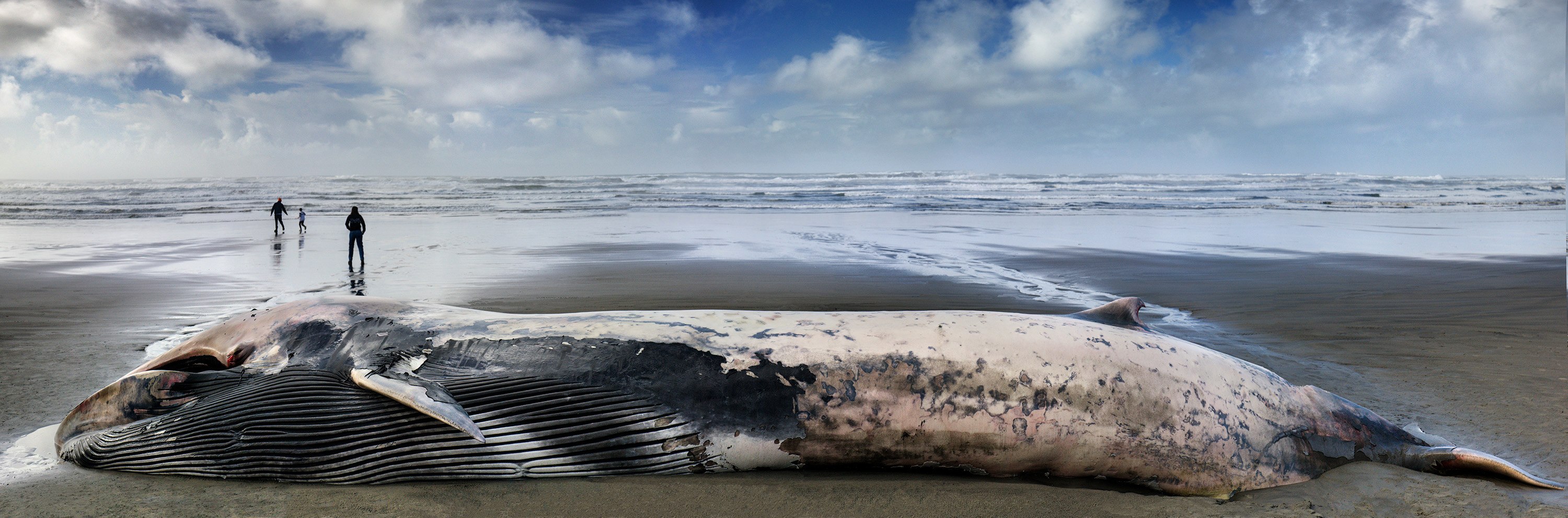
Fin whales seldom beach, as they typically live and die far out at sea. On a rare occurrence, one washed ashore on Oregon’s north coast this winter. Coincidentally, and against the odds, another fin whale was grounded in nearly the same spot, and close to the same day two years earlier. Unlike that stranding, this young whale had been dead for a while before reaching its resting place. High seas and winds drove the carcass north to Sunset Beach, near the high-tide line, where it stretched out parallel to the waves that pushed it in.
On the day I took this photograph, groups of visitors stood in wonder at being so close to a whale, even, or especially, a deceased one. Like me, most stayed for a while walking around its carcass, examining it closely, sometimes touching it. At the same time, some debated the reasons for its short life, and a few recalled similar encounters with grounded whales.
Members of the nearby Grand Ronde Tribes were able to harvest parts of the whale, presumably using its bones for carving, and its baleen for weaving baskets, according to tribe traditions. Further up the beach were its entrails, likely removed during a necropsy performed on the whale, which also involved removing sections of its skin to determine the cause of death.
With much of its skin removed, many injuries became apparent. Pieces of its body had been torn off, possibly from orcas that attack and occasionally feed on fin whales. Recently, tides and storm waves carried its carcass even further up the beach, where its desiccated remains sank into the sand, feeding flocks of seagulls.