
In northeastern Arizona, an ancient system of red rock canyons is carved by streams originating in the nearby Chuska Mountains. For thousands of years, these stream basins have been inhabited by native peoples, from the hunter-gatherer Archaic period to the Basketmaker and ancestral Puebloan cultures that built settlements. Today, roughly forty families of the Navajo Nation live year-round in the sheltered tributaries of Chinle Wash to farm and raise livestock.
The canyon's sandstone walls are tinged red by iron oxide, causing them to shimmer with varying hues depending on the angle and intensity of the light. The distinctive shearing of this rock, formed from ancient dunes compressed into stone, creates nearly vertical cliffs with smooth, scalloped surfaces. Rainwater flowing off the plateaus stains the walls, nourishing lichens and bacteria that form tanned streaks, called desert varnish, that stripe the cliffs.
Generations of canyon dwellers left their mark through carved and painted inscriptions. Everywhere I hiked through the canyons, I saw remains of ancestral dwellings along the base of the cliffs and on benches and ledges overlooking this fertile landscape. Rimming the creeks that flow through the farmlands are the currently occupied farmhouses.
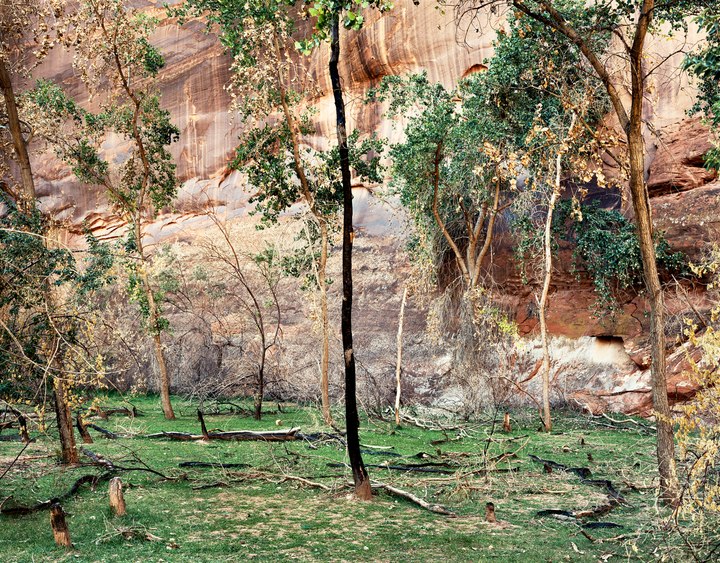
The most surprising encounter I had was walking through the ashened ground of a sheltered wood. Residents burn underbrush each spring to revitalize the soil and encourage new grass growth where they graze cattle, sheep, and goats. Many wildlife species also inhabit the canyon, including bears, mountain lions, deer, turkeys, coyotes, bobcats, and badgers. Birds—eagles, hawks, owls fill the sky, and the cliffs echo the beautiful, haunting song of the ever-present Canyon Wren.