
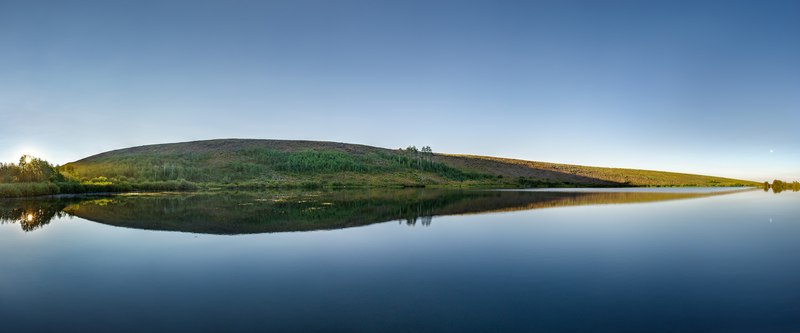
Impounded by a glacial moraine, Fish Lake is a bowl-shaped depression that captures the spring runoff from the deep winter snows that blanket the nearly 10,000 ft. ridge of Steens Mountain.
At one time, the mountain was encased in ice, and it continues to transform in the aftermath of eons of thick ice flows. Barren rock and glacial sediment coated the mountain after the ice age, followed by a slow process that turned infertile land into soil that supported plant growth and animal life.
The lake sits near the treeline under the subarctic crest of the mountain. Located on its western slope, it is exposed to relentless westerly winds that assault the loftiest ridge in eastern Oregon, surrounded by desert extending hundreds of miles in every direction. Bordered by willows and aspens, the shallow lake is stocked with trout and fished by campers who pitch tents and park RVs around the lake’s perimeter. As the lake matures, it will continue to fill with sediment and plant debris. Like other former tarns dotting the western flank of Steens Mountain, the lake will eventually transition to a lush, green meadow.
I came upon this scene idly, not fully recognizing what was going on but instinctively taking out the camera to satisfy my curiosity. Later, I discovered that the picture showed the sun rising above its eastern shore at dawn as the full moon set on its western flank. Together, they created a symmetry complemented by the lake’s mirrored reflection of the ridge and sky.