
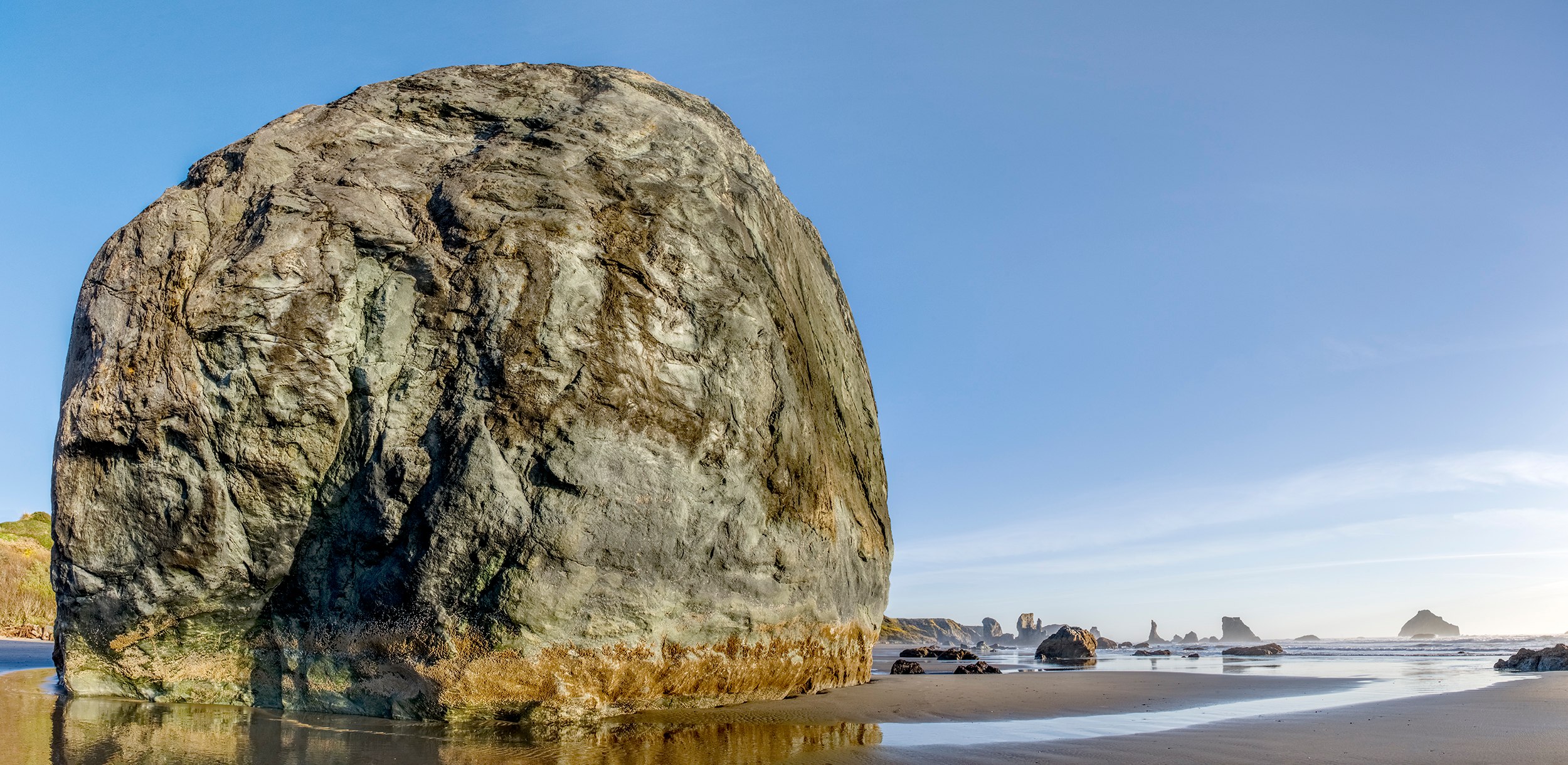
Sea stacks along Oregon's south coast are vestiges of rocky headlands that were once located much farther west. Today, we admire their remains: islands, prominences, and pinnacles that dot the nearshore, as shown in this photograph.
Along this coast, before being eroded into these stunning formations, they were created by a mixture of rock types from various locations, pushed together by the collision of tectonic plates floating on Earth's slippery mantle. As softer rocks around them eroded away, the harder blocks appeared to be stranded on this beach. Composed of schist, chert, greywacke, and greenstone, the scene features a variety of colorful, weathered columns.
For this reason, Bandon Beach is well-known for its sea stacks. I've wandered through the maze of these rocks of various sizes—one 20-foot-high pillar shaped like a wizard's hat, another a 100-foot-tall monolith with arches and caves incorporated into its structure. At low tide, looking across the expansive flats and this diverse gallery of formations nearby and far away, I felt as if they had emerged from beneath the flat sandy beach. At high tide, when surrounded by waves, they sometimes resemble floating islands or wrecks adrift.
According to the native Nasomah people, the most famous sea stack, Face Rock, was home to the young daughter of a former chief. Legend says that while night-swimming, she encountered an evil presence in the ocean and, to escape its deadly gaze, looked skyward as she still does today, with her face outlining the northern edge of the rock.