
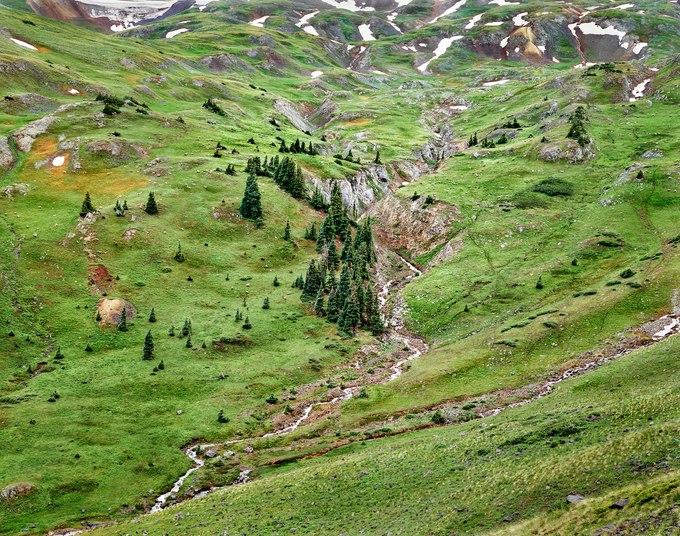
I heard the bleating before I saw the herd. Hundreds of sheep stretched across a verdant alpine basin beneath one of Colorado's highest passes.
For the past two centuries, Peruvian, Mexican, and Basque sheepherders have overseen their flocks during the short summers on the lofty plateaus of southwestern Colorado’s San Juan Mountains. Snow still clung to the upper edges of Palmetto Gulch, its meltwater feeding the grassy bowl bisected by tumbling water, where sheep grazed. The cacophony of a few hundred baaing sheep mingled with the tumbling water, echoing across the canyon.
Bighorn sheep are native to this area. They resemble domesticated sheep yet differ in at least one critical trait; domesticated sheep carry bacteria to which they are immune, though transmission to their wilder cousins, the bighorn sheep, can cause pneumonia and death. The open range of the managed herds overlaps the wider-ranging territory of the bighorns, leading to the decimation of their numbers. According to an article in High Country News, Terry Meyers, executive director of the Rocky Mountain Bighorn Society, bluntly observed: “We’re looking down on a ticking time bomb for a mass die-off of Rocky Mountain bighorn sheep.”
In addition to the deeply trenched sheep paths crisscrossing this 12,000-foot landscape, the remains of silver and copper mining operations are present. Though those operations ceased in the early part of the 20th century, colorful tailings expose debris from buried mine entrances.