
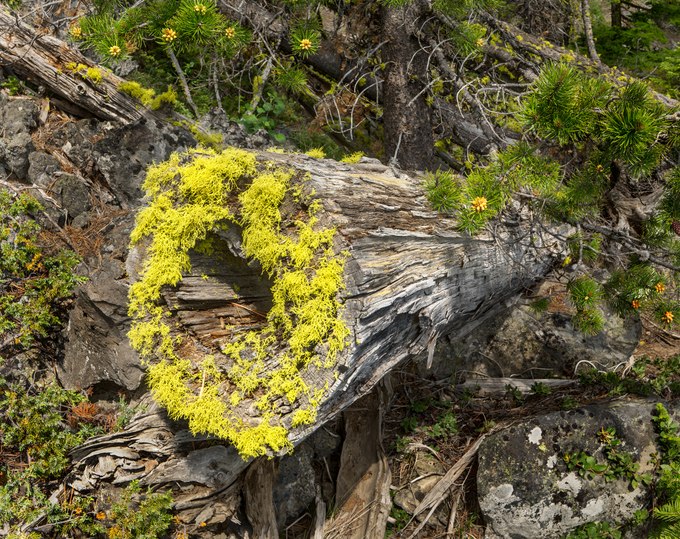
Wolf Lichen is common in the Pacific Northwest, especially along the shores of Paulina Lake in central Oregon’s Newberry Crater caldera, where it forms thick patches. Moist lake air and ample sunlight help it thrive in the parts of the Ponderosa and lodgepole forests facing the lake.
Wolf Lichen is beautiful but poisonous, earning its name because it was used to poison food left out for wolves and foxes, who were killed after ingesting it. It has virtues; native peoples used the lichen to weave mats, dye fabrics, and as a natural insect repellent. In small doses, it was also used to make medicines to relieve bruises, swelling, and boils.
The fallen log on which this lichen grows was cut to clear the trail that circles the lake. As the tree died, its heartwood decayed, and its hollowed-out trunk became an attractive surface for the lichen to attach to as it fed on airborne nutrients, water, and sunlight. I often wandered by this spot while photographing along the lake, without noticing this lichen cluster. It took a midsummer thunderstorm followed by sparkling sunlight to catch my attention. After the added moisture of an intense rain shower, the lichen swelled, its color intensified, and it shifted from gray-green to a rich chartreuse. It had quickly bloomed and, almost as quickly, shriveled back to its smaller, less vibrant self in the drying high-desert air.